Placement of a Refrigerated Air Dryer in Your System

When integrating a refrigerated air dryer into your compressed air system, strategic positioning becomes essential for achieving maximum efficiency and protecting your equipment from moisture-related damage. The location of the air dryer directly impacts its effectiveness, energy consumption, and the overall reliability of your compressed air system.
Understanding where to position your refrigerated air dryer involves evaluating multiple factors, including temperature conditions, pressure requirements, maintenance accessibility, and downstream equipment protection. The decisions you make regarding placement will influence not only the immediate performance of the dryer but also the long-term operational costs and maintenance requirements of your entire system.
System Flow Requirements
The flow of compressed air through your system follows a logical sequence that must accommodate the refrigerated air dryer at the optimal point. Compressed air exits the compressor at elevated temperatures and contains significant moisture content that requires removal before reaching your end-use applications. Proper placement of a refrigerated air dryer in your system requires positioning the unit after the compressor and aftercooler but before critical downstream equipment.
Temperature considerations play a crucial role in determining the ideal location. Refrigerated air dryers operate most efficiently when receiving air at temperatures between 80 and 100 degrees Fahrenheit. Placing the dryer immediately after the compressor, when air temperatures may exceed 200 degrees Fahrenheit, will reduce efficiency and potentially damage the refrigeration components.
Aftercooler Integration Strategy
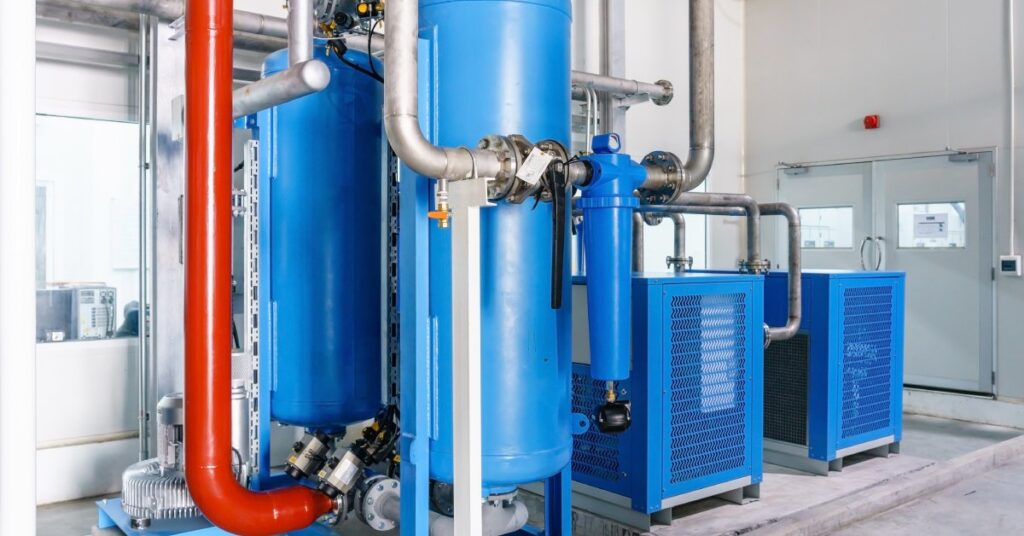
The placement of your aftercooler and refrigerated air dryer requires careful coordination to achieve maximum moisture removal. The aftercooler performs the initial cooling function, reducing air temperature and condensing a significant portion of the moisture. However, the aftercooler alone cannot achieve the low dew points required for many applications, making the refrigerated air dryer essential for complete moisture control.
Positioning the refrigerated air dryer after the aftercooler creates a two-stage cooling process that maximizes moisture removal efficiency. The aftercooler handles the bulk of the temperature reduction and initial condensation, while the refrigerated air dryer provides the precision cooling necessary to achieve consistent dew points. This configuration reduces the workload on the refrigerated air dryer, thereby improving energy efficiency and extending the life of the components.
Receiver Tank Placement
The compressed air receiver tank serves as a storage vessel and helps stabilize system pressure, but its placement relative to the refrigerated air dryer requires strategic planning. Installing the receiver tank ahead of the dryer provides additional cooling time and allows for preliminary moisture separation through natural condensation. This configuration reduces the moisture load entering the refrigerated air dryer, thereby improving overall system efficiency.
When the receiver tank is positioned before the refrigerated air dryer, verify that adequate drainage provisions are in place to remove condensed moisture. Automatic drain valves on the receiver tank prevent accumulated moisture from entering the dryer and overwhelming its capacity. Arefrigerated air dryerbenefits from this upstream receiver tank configuration by receiving pre-cooled air with reduced moisture content.
Distribution System Protection
Downstream equipment protection drives many placement decisions for refrigerated air dryers. Sensitive pneumatic equipment, instrumentation, and processes require consistently dry compressed air to function properly. Positioning the refrigerated air dryer as close as possible to the point where the main distribution line begins ensures maximum protection for all downstream applications.
Consider the length and routing of piping between the refrigerated air dryer and critical equipment. Extended piping runs provide opportunities for reheating and potential moisture re-entry through temperature variations. Insulating distribution piping and minimizing run lengths help maintain the dry conditions achieved by the refrigerated air dryer throughout the system.
Maintenance Access Requirements
Accessibility for routine maintenance and service must influence the placement decision for your refrigerated air dryer. These units require regular attention, including filter changes, condensate drain maintenance, and refrigeration system service. Positioning the dryer in a location that provides adequate clearance on all sides enables efficient maintenance procedures and reduces downtime.
Electrical connections, condensate drain lines, and refrigeration components all require periodic access for service. Planning for maintenance requirements during the initial installation prevents future complications and ensures the refrigerated air dryer can receive proper care throughout its operating life. Adequate lighting and ventilation in the installation area further support maintenance activities and extend the longevity of components.
Environmental Considerations
The operating environment significantly impacts refrigerated air dryer performance and must factor into placement decisions. Ambient temperature, humidity levels, and air circulation all affect the efficiency of the refrigeration process. Installing the unit in a well-ventilated area with stable ambient temperatures leads to optimal performance and prevents premature component failure.
Avoid locations subject to extreme temperature variations, direct sunlight, or poor air circulation. The refrigeration system relies on effective heat rejection to maintain proper operation, and compromised environmental conditions will reduce efficiency and increase energy consumption. Indoor installations typically provide more stable operating conditions than outdoor placements, though proper weather protection can enable successful outdoor installations.
Integration With Existing Equipment
Existing system components must be evaluated when determining the optimal placement for a new refrigerated air dryer. Retrofit installations require careful analysis of current piping, electrical supply, and drainage capabilities. The placement of a refrigerated air dryer in your system may require modifications to existing piping or electrical infrastructure to achieve the ideal configuration.
Pressure drop considerations become important when integrating a refrigerated air dryer into an existing system. The dryer will introduce an additional pressure drop that must be accounted for in system calculations. Positioning the unit to minimize total system pressure drop while maintaining effective moisture removal requires balancing multiple engineering factors.
Long-Term Performance Optimization
Strategic placement decisions made during installation will impact the long-term performance and reliability of your refrigerated air dryer. Proper positioning means the unit operates within design parameters and achieves the expected service life. Consider future system expansion plans and how they might affect the optimal placement of the refrigerated air dryer.
Regular monitoring of system performance indicators helps validate placement decisions and identify potential improvements. Tracking energy consumption, moisture levels, and maintenance requirements provides data to optimize system configuration over time. The initial placement strategy should accommodate future adjustments and system modifications as operational requirements evolve.
Ensuring System Reliability
The placement of a refrigerated air dryer in your system directly influences the reliability and efficiency of your compressed air operations. Proper positioning protects downstream equipment, minimizes energy consumption, and reduces maintenance requirements. Taking the time to carefully evaluate all placement factors during the design phase prevents costly modifications and performance issues later. Work with experienced professionals to develop a placement strategy that meets your specific operational requirements and maximizes the return on your compressed air system investment.